Is being depressed a sign of kufr? Is my anxiety due to sinning? In this episode of Thinking Islam, we explore how Islamic approaches towards mental health challenge traditional stigmas and modern psychological frameworks with Dr Zoheir Esmail. From examining the concepts of qalb, nafs, and ruh to investigating whether depression could indicate spiritual disconnection, this conversation unpacks the complex relationship between faith, Eurocentric reason, and mental wellness. We delve into the history of Islamic approaches towards mental wellness, their developments, from early medieval scholars to contemporary applications in modern therapeutic practice. The conversation tackles the stigma surrounding mental health in Muslim communities, examining fears around hellfire and spiritual disconnection, whilst investigating the fascinating realm of occult sciences, jinn, and evil eye, questioning whether these should be taken seriously as therapeutic tools or understood as sophisticated placebo mechanisms that nonetheless offer genuine healing benefits. Dr Esmail reveals how Islamic psychology creates mental health wellbeing through understanding the human self as naturally anxious by creation, whilst offering spiritually integrated therapy that addresses religiosity and faith to achieve holistic healing that secular approaches often overlook.

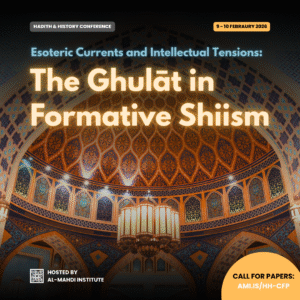
Call for Papers: Esoteric Currents and Intellectual Tensions: The Ghulāt in Formative Shiism
Join us for the Hadith and History conference, ‘Esoteric Currents and Intellectual Tensions: The Ghulāt in Formative Shiism,’ hosted by Al-Mahdi Institute on 9th – 10th February 2026. This event will explore the ghulāt movements within early Shiism and their impact on the Imāmī tradition. Scholars are invited to submit abstracts on the historical and theological dimensions of these movements. Don’t miss this chance to engage in essential discourse in Islamic studies!